
 русский
  عربي
عربي  Español
 Português
 日本語
日本語 한국어
한국어 Français
 Deutsch
 ไทย
ไทย Indonesia
 Việt Nam
 Türkçe
 O'zbek
 简体中文
简体中文 Italiano
 Čeština
 Eesti
Eesti Gaeilgenah Éireann
 Bai Miaowen
 íslenska
 Cymraeg
 Български
 اردو
اردو Polski
 hrvatski
 українська
 bosanski
 فارسی
فارسی Lietuvių
 Latviešu
 עברית
עברית România limbi
 Ελληνικά
 dansk
dansk magyar
 Norsk
Norsk suomi
suomi Nederlands
 Svenska
 slovenčina
 slovenščina
 हिंदी
हिंदी Melayu
 Malti
Malti Kreyòl Ayisyen
 Català
 বাংলা
বাংলা Srbija jezik (latinica)


4 Hp 3 Phase Motor
4 hp 3 phase motor
Power and Performance
Power Output: The motor is rated at 4 horsepower (approximately 3 kW), which makes it ideal for medium-duty industrial applications. This power rating allows the motor to handle tasks such as driving pumps, fans, and small machinery with significant torque. The 4 HP rating provides a robust power source, ensuring reliable performance in applications that require steady and substantial mechanical output.
Efficiency: With an operational efficiency ranging from 85% to 90%, this motor excels in energy conversion. The high efficiency means that the motor converts a large portion of the electrical energy into mechanical energy, minimizing energy waste. This not only contributes to reducing operational costs but also helps in conserving energy, making the motor an economical choice for long-term use.
Electrical Specifications
Voltage and Frequency: The motor is designed to operate on three-phase alternating current (AC), which is commonly used in industrial settings for its stable and efficient power supply. It supports various voltage configurations, typically including 220/380V or 380/660V, depending on regional electrical standards. The motor operates at standard frequencies of either 50 Hz or 60 Hz, ensuring compatibility with different global power systems and making it versatile for international applications.
Current Rating: The motor's current consumption is tailored to the voltage it operates at. For instance, when running on 220V, the motor draws approximately 10-12 amps, while at 380V, it consumes around 6-7 amps. This current rating ensures that the motor operates within safe electrical limits and provides consistent performance across various voltage levels.
Construction and Materials
Frame and Housing: The motor's frame is typically constructed from cast iron or aluminum. Cast iron is chosen for its durability and rigidity, making it suitable for harsh industrial environments where durability and resistance to physical stress are crucial. On the other hand, aluminum provides a lighter alternative with excellent heat dissipation properties, making it ideal for applications where cooling efficiency is a priority.
Internal Components: The internal components, including the rotor and stator, are made from high-quality silicon steel. This material is selected for its ability to minimize core losses, which in turn enhances the overall efficiency of the motor. By reducing iron core losses, the motor generates less heat during operation and improves performance, contributing to its reliability and longevity.
Cooling and Ventilation
Cooling System: The motor features an internal fan that facilitates self-ventilated cooling. This cooling system draws external air through the motor to dissipate the heat generated during operation. Effective cooling is essential for maintaining optimal operating temperatures, preventing overheating, and ensuring that the motor performs consistently and efficiently.
Protection Class: Rated at IP55, the motor is designed to withstand exposure to dust and low-pressure water jets. This protection class ensures that the motor can be used in various industrial environments where dust and moisture are present, providing durability and reliability even under challenging conditions.
Insulation and Safety
Insulation Class: The motor's insulation is classified as either F or H. Class F insulation can handle temperatures up to 155°C, while Class H insulation is rated for temperatures up to 180°C. This high-grade insulation helps in protecting the motor windings from thermal damage, thereby extending the motor's lifespan and maintaining performance under varying temperature conditions.
Safety Features: To prevent overheating, the motor may include integrated thermal protection. This feature automatically shuts down the motor or reduces its power if temperatures exceed safe levels. Such safety mechanisms are crucial for protecting both the motor and the connected equipment from potential damage due to excessive heat.
Installation and Mounting
Mounting Options: The motor offers flexible mounting options, including foot-mounted (B3) and flange-mounted (B5) configurations. This flexibility allows for easy installation in a variety of settings, whether it be on machinery or conveyor systems. The ability to choose the appropriate mounting style simplifies integration into existing setups and facilitates maintenance and replacement.
Dimensions: Designed to meet standard industrial dimensions, the motor is compatible with a wide range of equipment. This standardization ensures that the motor can be easily replaced or upgraded without requiring significant modifications to existing infrastructure, enhancing its adaptability and ease of use.


Technical specifications
| Technical Parameter | Specification |
|---|---|
| Power Output (Rated Power) | 4 HP (approximately 3 kW) |
| Voltage | 220/380V, 380/660V (±10%) |
| Frequency | 50 Hz / 60 Hz |
| Current (at 220V/380V) | 10-12 A / 6-7 A |
| Speed (RPM) | 1500 RPM (4-pole) |
| Efficiency | 85% - 90% |
| Power Factor | 0.8 - 0.9 |
| Insulation Class | F (155°C) / H (180°C) |
| Protection Class | IP55 (Dust and Water Resistant) |
| Cooling Method | IC411 (Self-ventilated with fan) |
| Mounting Type | B3 (Foot-mounted) or B5 (Flange-mounted) |
| Frame Material | Cast Iron / Aluminum |
| Shaft Diameter | 25 mm |
| Shaft Length | 50 mm |
| Weight | 20-30 kg (Depending on Frame) |
| Operating Temperature | -20°C to +40°C |
| Ambient Temperature | Max 40°C |
| Altitude | ≤ 1000 meters |
| Noise Level | ≤ 70 dB(A) |
| Vibration Level | ≤ 2.8 mm/s |
| Starting Torque | 1.8 - 2.5 times rated torque |
| Moment of Inertia | 0.0020 kg·m² |
| Connection Type | Star (Y) / Delta (Δ) |
| Bearing Type | Sealed Ball Bearings |
| Standards Compliance | IEC 60034, ISO 9001 |
Application areas of 4 hp 3 phase motor
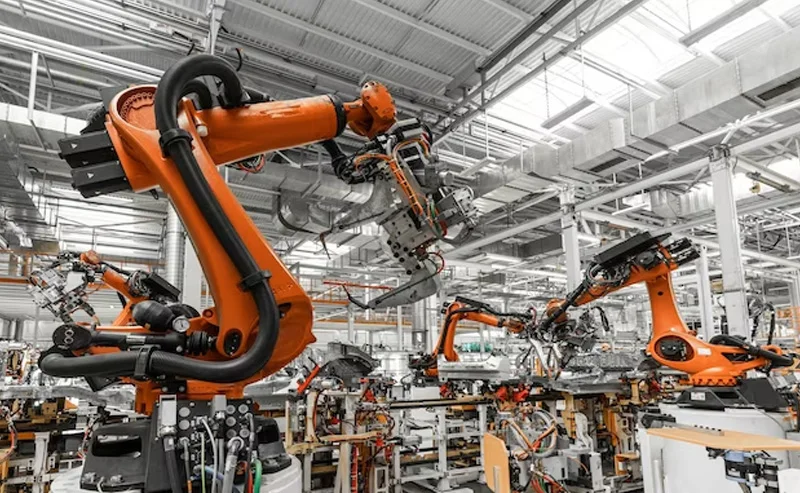
Industrial Machinery
A 4 HP 3-phase motor is highly versatile, fitting a range of industrial and commercial applications due to its power and efficiency. It is commonly used in industrial machinery, where it drives medium-sized pumps for fluid transfer and operates fans and blowers for effective ventilation in factories and warehouses. In HVAC systems, it powers air handling units and heating system fans, crucial for maintaining indoor air quality and temperature control.
In agriculture, this motor is used in feed mills for grinding and mixing animal feed, and in irrigation systems for distributing water efficiently. In manufacturing, it powers machine tools such as lathes and drills, as well as mixers and crushers in various production processes.
The motor is also employed in commercial applications, driving small elevators, escalators, and refrigeration units to ensure reliable operation in buildings and retail environments. Additionally, in energy and utilities, it supports water and wastewater treatment facilities by driving essential equipment like pumps and aerators. The motor's adaptability and power make it essential for a broad spectrum of tasks, enhancing efficiency and reliability across multiple sectors.
Ienergy and utilities secto
Water Treatment Plants: This motor drives a range of equipment essential for the purification and treatment of water. It powers pumps that move water through filtration systems and chemical dosing units, ensuring contaminants are removed effectively. Additionally, it operates mixers that blend chemicals with water to enhance purification processes. By providing reliable and consistent power, the motor helps maintain the high standards of water quality required for safe consumption and environmental protection.
Wastewater Treatment: In wastewater treatment plants, the motor is instrumental in operating pumps and aerators that are vital for processing sewage and wastewater. It drives pumps that move wastewater through various treatment stages, including primary, secondary, and tertiary treatments. The motor also powers aerators that introduce air into the wastewater, promoting microbial activity necessary for breaking down organic matter. This functionality is essential for reducing pollution, improving water quality, and meeting regulatory standards for discharge into natural water bodies.

Installation Method:
| Structure and installation type (IM code)) |
IM B3 | IM B8 | IM B5 | IM B6 | IM V5 | IM V1 | IM B7 | IM V6 | IM V3 |
| Installation diagram |  |
 |
 |
 |
 |
 |
 |
 |
 |
| Frame size | 63-450 | 63-160 | 63-280 | 63-160 | 63-160 | 63-450 | 63-160 | 63-160 | 63-160 |
| Structure and installation type (IM code)) |
IM V37 | IM V17 | IM B34 | IM V19 | IM V18 | IM B14 | IM V35 | IM V15 | IM B35 |
| Installation diagram |  |
 |
 |
 |
 |
 |
 |
 |
 |
| Frame size | 63-132 | 63-13 | 63-132 | 63-132 | 63-132 | 63-132 | 63-160 | 63-160 | 63-450 |
FAQ
1.What are the primary applications for this motor, and where is it commonly used?
This motor is designed for medium-duty industrial and commercial applications. It is commonly used in powering equipment such as pumps, fans, and conveyors. In industrial settings, it drives machinery in water treatment facilities, HVAC systems, and manufacturing processes. It also finds applications in agricultural equipment, including feed mills and irrigation systems. Additionally, it is used in commercial settings for elevators, escalators, and refrigeration units.
2.What are the key electrical specifications of this motor?
The motor operates on three-phase AC power, supporting various voltage configurations, such as 220/380V or 380/660V, depending on regional standards. It runs at standard frequencies of either 50 Hz or 60 Hz. The current rating varies with voltage; for example, at 220V, it typically draws around 10-12 amps, and at 380V, it consumes about 6-7 amps. These specifications ensure stable and reliable operation across different electrical systems.
3.What materials are used in the construction of this motor, and how do they affect its durability?
The motor's frame is typically made from either cast iron or aluminum. Cast iron provides exceptional durability and rigidity, making it suitable for harsh industrial environments where durability is crucial. Aluminum, on the other hand, offers a lighter weight and better heat dissipation, making it ideal for applications where cooling efficiency is important. The internal components, such as the rotor and stator, are made from high-quality silicon steel to reduce core losses and improve overall efficiency.
4.How does the motor handle cooling and ventilation?
The motor is equipped with an internal fan that uses self-ventilation to dissipate heat generated during operation. This cooling system ensures that the motor maintains optimal operating temperatures, preventing overheating and ensuring consistent performance. Additionally, the motor typically has an IP55 rating, which protects it from dust ingress and low-pressure water jets, making it suitable for use in various industrial environments where exposure to dust and moisture is common.
5.What insulation class does the motor have, and what are its implications for performance?
The motor features insulation classes such as F or H. Class F insulation can withstand temperatures up to 155°C, while Class H insulation can handle temperatures up to 180°C. This high-grade insulation helps protect the motor's windings from thermal damage, thereby extending its operational life and maintaining performance under varying temperature conditions. It ensures that the motor can handle demanding environments without compromising reliability.
6.What are the mounting options for this motor, and how does this affect installation?
This motor offers flexible mounting options, including foot-mounted (B3) and flange-mounted (B5) configurations. These mounting styles allow for easy installation in different setups, whether on machinery or conveyor systems. The ability to choose between mounting options ensures that the motor can be adapted to various installation requirements, making it versatile and easy to integrate into existing systems.
7.How does the motor support variable speed and precise control?
For applications requiring variable speed, the motor can be paired with a variable frequency drive (VFD). The VFD allows for precise control over the motor's speed and torque, making it adaptable to different operational needs. This capability is particularly useful for processes that demand adjustments in speed or load, enhancing overall process control and efficiency. By providing this level of flexibility, the motor can meet a wide range of application requirements effectively.
Hot Tags: 4 hp 3 phase motor, China 4 hp 3 phase motor manufacturers, suppliers, factory, three phase asynchronous motor, three phase electric motor
You Might Also Like


Send Inquiry